

By 2100 over 1 billion people on Earth will live in low-lying coastal zones. 70% of these will live in Southeast Asia, one of the most vulnerable regions in the world to climate change. The next decade will be the most critical for the future existence of these societies.
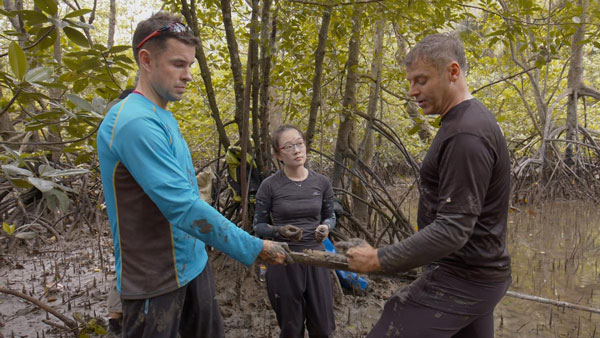
Professor Benjamin Horton, Director of the Earth Observatory of Singapore and one of Asia’s leading climate scientists, studies sea-level rise and their impacts across Southeast Asia, where sea level is set to rise faster than anywhere else in the region. Prof Horton is researching past sea-level changes to calibrate models that will help predict sea levels of the future. While historic records of sea-level rise can be found in the Northern Hemisphere, in Southeast Asia data is limited to the last 50 years. In this episode, we travel with Prof Horton and his team to find natural records well-hidden in mangrove swamps. Mangroves act as carbon sinks and their samples can be radiocarbon dated to provide valuable insight into past sea-levels. With the tide flowing in and time running out, one last sample provides them with detailed records dating back over 2,000 years.