


Understanding the predicted impact of rising sea levels around Southeast Asia affords governments time to adapt building protocols to survive sea level rise of up to a 7-metres. What are the solutions to protecting cities like Singapore, Mumbai, Bangkok, and more cities that could be erased by 2050?
Southeast Asia is a unique part of the world, featuring low-lying countries, pristine islands and vast coastal habitats. 600 million people across the region live in low elevation coastal zones, all vulnerable to sea level rise, flooding, storm surges and extreme weather events like Tsunamis and Typhoons. Scientists and engineers are working together to design and develop sustainable solutions to ensure the region’s prosperity this century.
Sea level rise is a complex problem. Sea level rise will be different here in Singapore from that in Jakarta, from that in Manila. This is because there are a variety of global, regional and local processes which vary in time and in space. Globally there are two main drivers. The first driver is the temperature of the ocean. If the temperature of the ocean increases, it occupies a greater volume and sea level goes up. The second global driver is the melting of ice sheets. Ice sheets 10,000 miles away from Singapore are melting, that land-based ice is going into our oceans and sea-level rises.
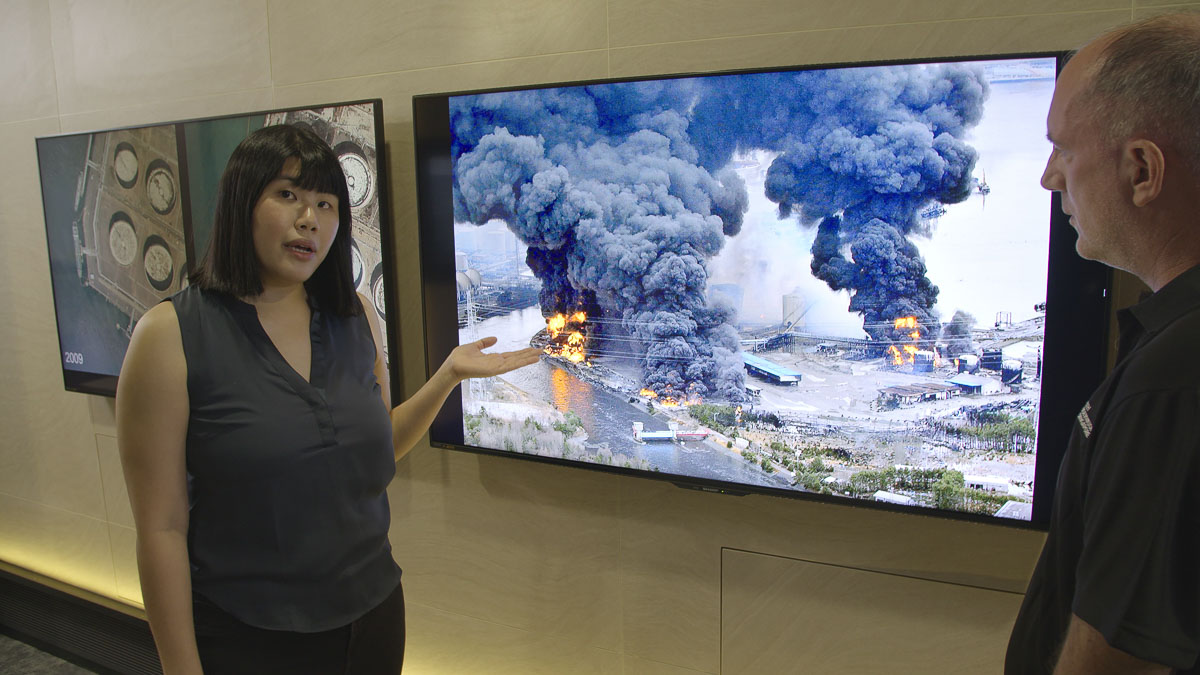
In this episode we explore predictive models for sea level rise over the next 100 years, the impacts of a warming Artic, the melting of the ice sheets in Antarctica and the rapid decline of glaciers in Greenland. How high and how fast is sea level going to impact the region over the next 100 years? Prof Ben Horton (Director of EOS) travels across Singapore to meet with engineers working on the flood defence systems, floating city designs for future living, and innovative engineering solutions for cities that stand to be impacted by sea level rise this century.